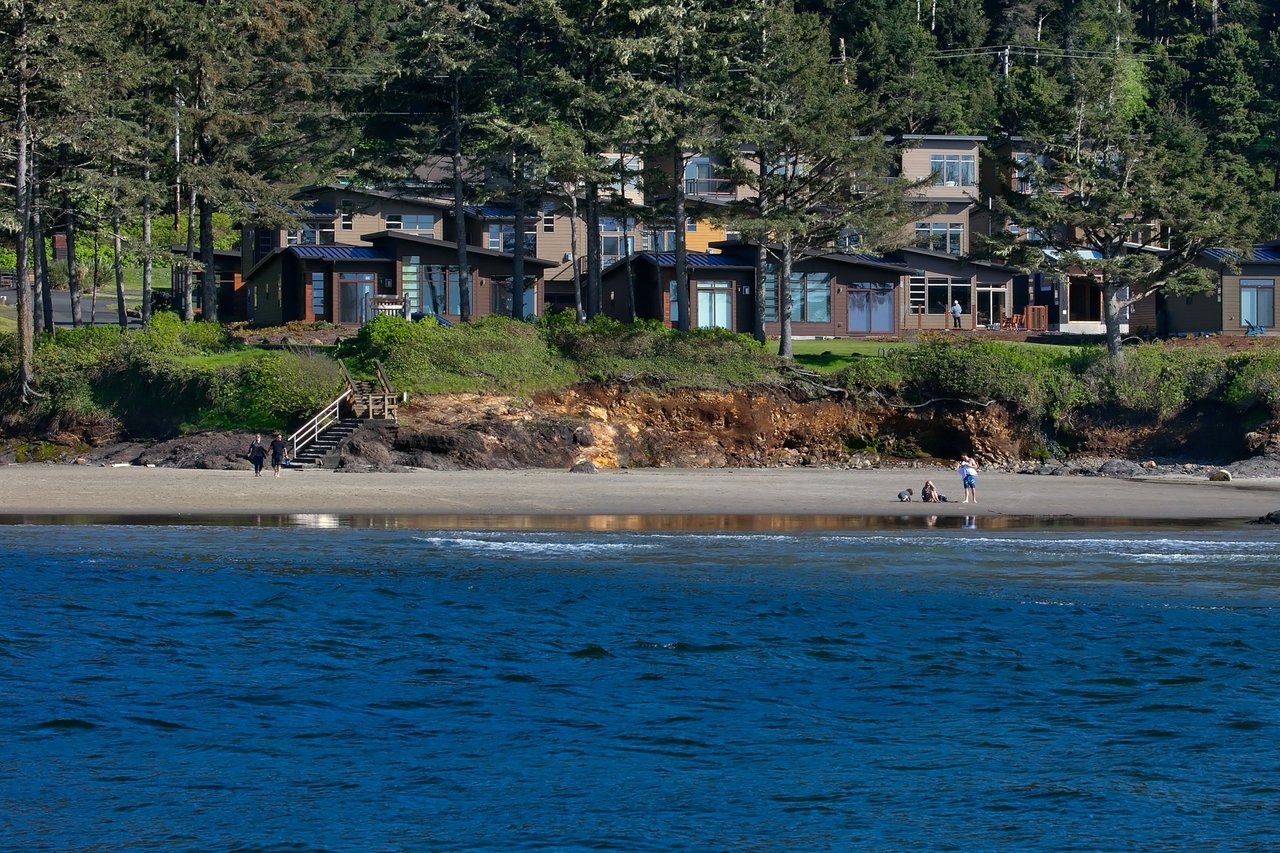
Owning an oceanfront home on the Oregon Coast is something most people only dream about. If you are thinking about how to sell an oceanfront home on the Oregon Coast, the conversation about pricing deserves the same care and attention that went into finding it in the first place.
This post is for sellers at any stage — whether you are just beginning to consider a listing or you want to understand how the current market works before you make any decisions. The Oregon Coast has its own rules, its own buyer pool, and its own set of value drivers that do not apply anywhere else. Getting the price right here starts with understanding all of that.
What the Oregon Coast Luxury Market Is Actually Doing in 2026
The coastal luxury market has shifted meaningfully in the past several months. Inventory has grown while buyer activity has moderated, and that combination requires sellers to be more deliberate about pricing than they may have needed to be in recent years.
It is worth saying at the outset that not all oceanfront homes are the same, and the market reflects that. Properties with exceptional features — new construction, elevator access, direct beach stairs, above-tsunami-zone elevation, dramatic basalt headland settings — have consistently demonstrated the ability to command strong prices when they are priced accurately for what they are. The key phrase there is priced accurately. Even exceptional properties do not sell themselves when the price gets too far ahead of where buyers are willing to go.
For the broader market, oceanfront homes in Lincoln County are selling, but buyers are taking their time, comparing options carefully, and negotiating with more confidence than they did a few years ago. Sellers who understand this and price accordingly are finding buyers. Those who price based on what they hope the market will do tend to wait longer and ultimately net less.
Oceanfront property on the Oregon Coast remains genuinely scarce and genuinely desirable. That has not changed. What has changed is that buyers have more choices and more patience than they did during the peak years, and pricing needs to reflect that reality.
Why Oceanfront Sellers Often Overprice
It is worth understanding why this happens, because it almost always comes from a reasonable place.
Oceanfront homes are emotional assets. Sellers have watched sunsets from that deck for years. They know what the Yaquina Head Lighthouse looks like at dusk, or what it means to hear the surf from the bedroom. That lived experience has real value — to the seller. It is harder to translate directly into a price per square foot.
There is also the comparison problem. Sellers often anchor to a neighbor's sale from a different market cycle, or to what oceanfront properties were doing in 2021 and 2022 when inventory was thin and buyers were competing aggressively. That market is not this market. Pricing from memory of a different cycle is one of the most common and costly mistakes in luxury real estate.
Finally, there is the "we can always come down" logic. The idea that you should list high and reduce later if needed sounds reasonable, but in practice it tends to produce the opposite of the intended result. Buyers notice how long a home has been on the market. Days on market is one of the first filters serious buyers apply, and a home with extended market time accumulates a stigma that is difficult to overcome even with a price reduction.
How Buyers Actually Value Oceanfront Property
Buyers in this price range are sophisticated. Many have been watching the market for months or years before making an offer. They know what comparable properties sold for, and they have usually seen several of them in person.
The framework most buyers use — whether consciously or not — is price per square foot relative to comparable sales. Verified 2026 waterfront closings in Lincoln County over $1,000,000 have ranged from roughly $400 to $465 per square foot for oceanfront and coastal properties. That range reflects real differences in condition, location, views, access, and amenities. A home at the top of that range needs to earn it across all of those dimensions. A home with deferred maintenance, a challenging floor plan, or a partially updated interior will land toward the middle or lower end of the range regardless of its list price.
Buyers also factor in the overall inventory picture. When they can see that similar homes have been sitting for months, they negotiate with more confidence. The listing price becomes less of an anchor and more of a starting point.
Who Actually Buys an Oceanfront Home in Lincoln County
This is one of the most important things for sellers to understand, and it shapes everything about how long the process takes and how to approach it with patience.
Lincoln County is a working coastal community. The local economy is built around fishing, tourism, healthcare, and small business — not the kind of income base that typically supports a million-dollar mortgage alongside property taxes and homeowner's insurance on an oceanfront property. The buyers for these homes almost never come from Newport, Lincoln City, or Waldport. They come from somewhere else.
In my experience, the buyers who purchase oceanfront homes in Lincoln County come primarily from Bend, Eugene, Portland, and Seattle. A meaningful number come from California and Arizona, and occasionally from as far as Washington D.C. These are professionals, retirees, and second-home buyers who have been dreaming about the Oregon Coast for years. Many have visited multiple times before they ever call an agent. They know the towns, they know the difference between Yachats and Lincoln City, and they have usually been watching the market quietly for months or longer before they surface.
That buyer profile has a direct effect on timing. The average days on market in Lincoln County across all price ranges runs around 122 days. For oceanfront homes priced above $1,000,000, it is often longer. This is not a sign that something is wrong with the property. It is simply the nature of waiting for the right out-of-area buyer to reach the moment in their life when they are ready to act.
Patience is not just a virtue in this market — it is a strategy. Sellers who understand that their buyer is likely sitting in a Portland suburb or a Bay Area office right now, thinking about their next chapter, tend to make better decisions about pricing and timing than sellers who expect the phone to ring in the first two weeks. The coast draws a specific kind of buyer. When that buyer finds the right home at the right price, they move decisively. The seller's job is to make sure the price does not send them to the next listing before they ever pick up the phone.
What Makes an Oregon Coast Oceanfront Home More — or Less — Valuable
Pricing a coastal home accurately requires understanding the factors that are specific to this market and this buyer pool. These are not the same variables you would weigh in Portland or Bend, and they matter enormously to the buyers who are actually shopping here.
Stairs versus single-level living. The Oregon Coast draws a strong retiree population, and that shapes what buyers are willing to pay. A home with multiple flights of stairs — interior or exterior — is simply harder to sell at a premium than a single-level home or one with elevator access. This is not a deal-breaker, but it is a real discount factor that needs to be accounted for in your pricing from the start.
Beach access. Direct stairway access from the property to the beach is one of the most significant value drivers on the coast. Buyers will pay a meaningful premium for it, and homes that have it tend to move faster and negotiate less. A deeded trail to a nearby beach access point is also desirable and adds value, but it does not carry the same weight as steps from your own property directly to the sand.
Geology. This one surprises some sellers, but experienced coastal buyers understand it well. Not all oceanfront is equal when it comes to what is underneath and in front of the home. Areas with sandy or unstable soils carry less of a premium — and in some cases raise concerns about long-term stability. Locations on hard basalt headlands are a different story. Basalt provides geological stability and tends to produce a more dramatic coastline: crashing waves, rocky outcroppings, and the kind of scenery that photographs beautifully and holds its value over time.
Otter Rock, Depoe Bay, and Yachats are the primary basalt headland communities in Lincoln County, and they consistently command attention from buyers who know the coast. Little Whale Cove and Sea Crest are particularly sought after for this reason, along with much of the Yachats shoreline.
There is one nuance worth understanding: basalt headlands rarely have sandy beaches directly in front of them. So when you find a property that sits on stable basalt with dramatic views and also has trail access to a nearby beach, you have something genuinely rare. That combination — geological stability, dramatic coastline, and beach access — represents the top of the market on the Oregon Coast, and buyers who want it know it.
Understanding where your property falls across these dimensions — stairs, access, and geology — is essential to pricing it accurately. A home that checks all the right boxes can support a price at the upper end of the comparable range. A home that has some of these features but not others needs to be priced to reflect that honestly.
The True Cost of Overpricing
Sellers sometimes focus on the potential downside of listing too low — leaving money on the table. That is a real concern, and I am not suggesting you give your home away. But the risk of pricing too high is equally real and often larger in dollar terms.
Every month a home sits on the market costs money in carrying costs — mortgage interest if applicable, property taxes, insurance, utilities, and maintenance. On a $1,500,000 property, those costs can run $3,000 to $6,000 per month or more depending on your situation.
More significantly, extended market time tends to produce lower final sale prices, not higher ones. Buyers who see a home that has been listed for 90, 120, or 180 days assume something is wrong with it — even if the only thing wrong is the price. When an offer finally comes in on a stale listing, it typically comes in well below what the seller would have received in the first 30 days at a realistic price.
The math usually favors pricing correctly from the start.
What "Correctly Priced" Means in Practice
For an oceanfront home in Lincoln County in 2026, a correctly priced listing is one that sits within the range of comparable closed sales adjusted for size, condition, and location; carries a price per square foot that reflects the home's actual competitive position rather than its best possible interpretation; is priced to attract genuine interest in the first few weeks on market; and leaves room for negotiation without crossing below what the seller needs to net.
That last point matters. Buyers expect to negotiate, particularly in a buyer-favoring market. If you need to net $1,200,000, your list price should account for that negotiating room. Listing at exactly your target number leaves you nowhere to move.
The transactions that define where the market actually is are not always the ones sellers expect. Closed sales in Lincoln County's coastal luxury market in 2026 tell a consistent story: well-priced properties are finding buyers, and the gap between list price and close price tends to widen the further a listing strays from realistic comparable values. If you would like to see the specific closed sale data for your area, I am happy to put that together for you personally.
Questions Worth Asking Before You Set a Price
Before arriving at a list price, I work through a set of questions with every seller. These are worth thinking through on your own as well.
What have comparable oceanfront homes actually sold for in the past six months — not what they were listed for, but what they closed at? How does your home compare to those sales on the dimensions that matter most: views, access, condition, floor plan, and where it sits on the coast? What is your timeline, and how does that affect your flexibility on price? What are your carrying costs per month, and how long can you comfortably sustain them? Are there physical characteristics of the home — stairs, an outdated kitchen, a split floor plan — that will affect how buyers perceive it relative to the competition?
None of these questions has a single right answer. But working through them honestly produces a much more grounded price recommendation than anchoring to a number from a different market or a different time.
A Note on the Current Moment
The Oregon Coast luxury market is in a period of adjustment, and that is not necessarily a bad thing. Markets that run hard eventually find equilibrium, and the coast remains one of the most desirable places in the Pacific Northwest to own property. The lifestyle here is rare, the inventory is limited by geography, and serious buyers are always in the market for the right home.
What this moment calls for is pricing that is grounded in current reality rather than peak-market optimism. Oceanfront homes that are priced well for what they are and where the market is today are selling. Homes that are priced for a different market are sitting, and the longer they sit the harder the conversation becomes.
If you are considering listing, the most valuable thing you can do before settling on a price is spend time with the actual closed sale data — not what homes are listed for, but what they have sold for. That is the conversation I have with every seller I work with, and it is always a more useful starting point than any other number in the room.
The Oregon Coast sells itself. The views, the lifestyle, the permanence of the ocean — none of that needs a sales pitch. What it needs is a price that lets the right buyer say yes.
Ready to Talk Through the Numbers?
I have been selling coastal property in Lincoln County for more than 20 years. If you are thinking about listing your oceanfront home or trying to make sense of where your current listing stands relative to the market, I am happy to sit down with you and go through the data.
You can reach me at (541) 270-3909 or [email protected]. More information about the Lincoln County market is available at audrascoasthomes.com.
Audra Powell is a Principal Broker and CRS, GRI, PSA, and CLHMS Guild Member at Premiere Property Group, LLC in Newport, Oregon. She specializes in luxury coastal properties throughout Lincoln County.